Recently announced Azure Data Lake addresses the big data 3V challenges; volume, velocity and variety. It is one more storage feature in addition to blobs and SQL Azure database. Azure Data Lake (should have been Azure Data Ocean IMHO) is really omnipotent. Just look at the key capabilities of Azure Data Lake:
Any Data
Native format, distributed data store. No need to pre-define schema information. From unstructured to structured data handling.
Any Size
Kilo bytes to Exa bytes OK. Ready for read/write.
At any scale
Scale to match your needs; high volume data handling of small writes and low latency. Can Aaddress near real-time web analytics scenarios.
HDFS Compatible
Works out-of-the box with Hadoop including services such as HD Insight
Full integration with Azure Active Directory
Supporting identity and access management over all of the data.
Azure Data Lake Store is therefore a hyper-scale HDFS repositiory designed specifically for big data analytics in the cloud. It is order made for IoT and thorughput-intensive analytics for high volume data.

Read more here.
The graphic is from a Microsoft Technet site
I checked out the preview portal (https://portal.azure.com/), I do not see it. Possible by the end of the year.
Any Data
Native format, distributed data store. No need to pre-define schema information. From unstructured to structured data handling.
Any Size
Kilo bytes to Exa bytes OK. Ready for read/write.
At any scale
Scale to match your needs; high volume data handling of small writes and low latency. Can Aaddress near real-time web analytics scenarios.
HDFS Compatible
Works out-of-the box with Hadoop including services such as HD Insight
Full integration with Azure Active Directory
Supporting identity and access management over all of the data.
Azure Data Lake Store is therefore a hyper-scale HDFS repositiory designed specifically for big data analytics in the cloud. It is order made for IoT and thorughput-intensive analytics for high volume data.
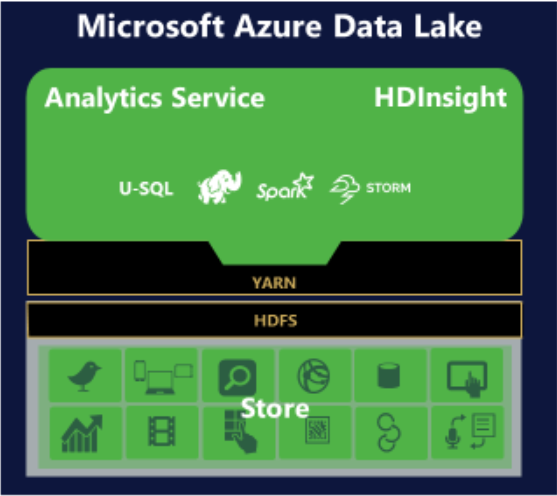
Read more here.
The graphic is from a Microsoft Technet site
I checked out the preview portal (https://portal.azure.com/), I do not see it. Possible by the end of the year.


